SIP paging vs multicast paging
SIP paging and multicast paging solve different parts of audio distribution. SIP can establish a call to an endpoint or platform group, while multicast can distribute a stream to multiple listeners on a managed network.
A SIP calling path
In a SIP deployment, a console or phone establishes a session through a compatible communication platform or supported direct calling mode. Paging groups may be handled by the platform. Concurrent calls and endpoint account limits depend on the actual equipment.
A multicast distribution path
With multicast, a sender transmits audio to a group address and configured receivers listen to that group. Endpoints need compatible audio formats and multicast settings. Network behavior is central to the design, particularly across switches, VLANs and routed links.
What the network team needs to review
Document multicast groups, ports, codec settings and required network reach. Review IGMP snooping, querier behavior and multicast routing where relevant with the network engineer. A design that works on one isolated switch may behave differently across a campus.
Choose from the operating requirement
SIP is useful where telephone calling and PBX operation are central to the workflow. Multicast can suit group audio distribution on a prepared network. A deployment may use both through a compatible platform or gateway, but this relationship must be confirmed for the selected products.
Prove the complete system
Test representative zones, simultaneous activity and recovery after a link interruption. Verify which message takes precedence when multiple sources address an endpoint. Protocol support does not by itself prove that every combination of third-party devices will interoperate.
A typical communication path

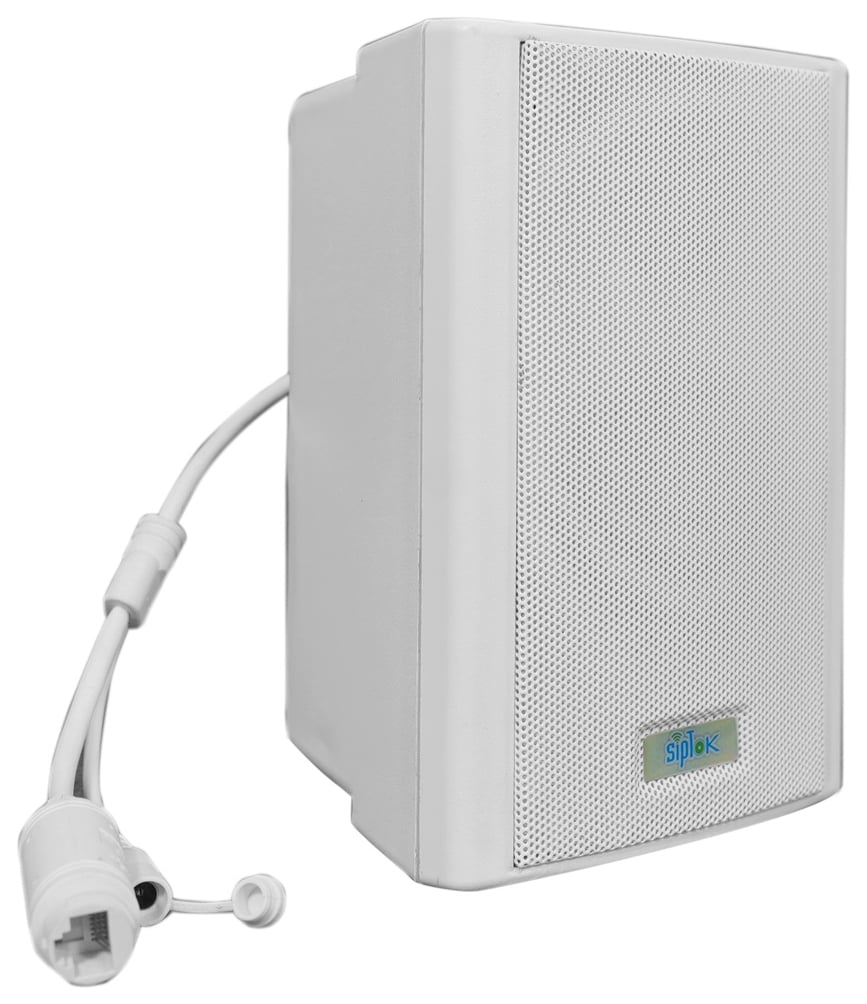
Multicast requires compatible receivers and a configured network. Confirm device power and network settings during design.